
Impersonation Monitoring
Your casino brand was built through years of investment. And then someone copies it overnight. A fake casino site carrying your logo, your colors, your domain name minus one letter. Players click. Deposit. Lose their money to fraudsters - and genuinely believe they were on your platform.
Scroll down
Our services
All the tools to climb the SERP
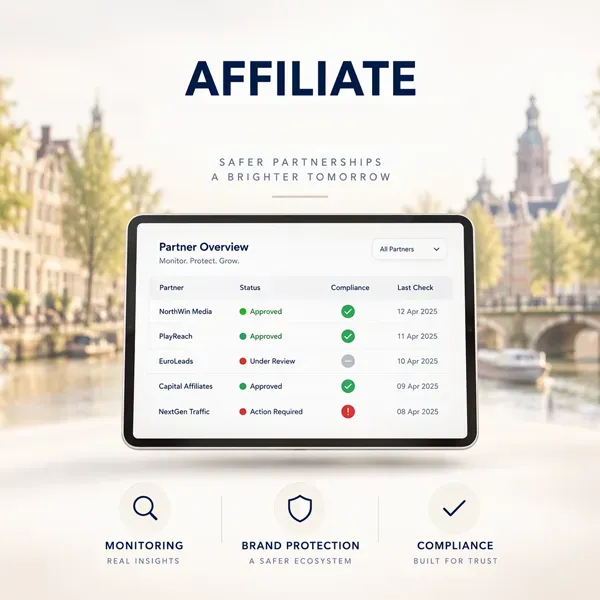
SEO for Affiliate Sites
SEO for casino and betting affiliates: the structure of review sites, top lists, bonus pages, and links that convert rankings into FTDs...
Learn more →
Technical SEO for iGaming
Technical SEO for casino and betting sites: crawling, JavaScript rendering, speed, mirrors, and an international architecture that Google can easily read.
Learn more →
iGaming SEO audit
Een iGaming SEO-audit controleert techniek, content, links en concurrenten en zet elke verbetering op volgorde van impact, voordat u meer budget investeert.
Learn more →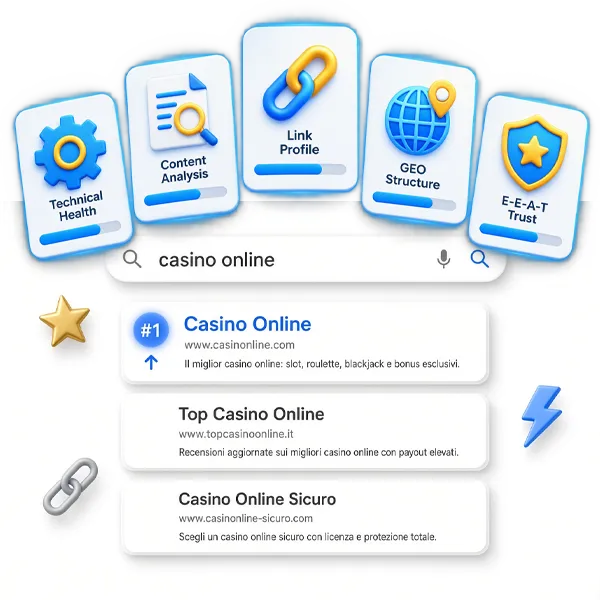
iGaming Linkbuilding
Link building for online casinos and betting sites: editorial placements, PR, and an anchor text strategy for each page, where relevance carries...
Learn more →
iGaming Brand Protection
Brand protection for casino and betting brands: detecting fake sites and misuse, monitoring, taking action, defending the brand on Google, and providing...
Learn more →
Protection of Branded Search Results
Protecting your branded search results: Ensure official pages are clearly at the top and players don't end up on clones or misleading...
Learn more →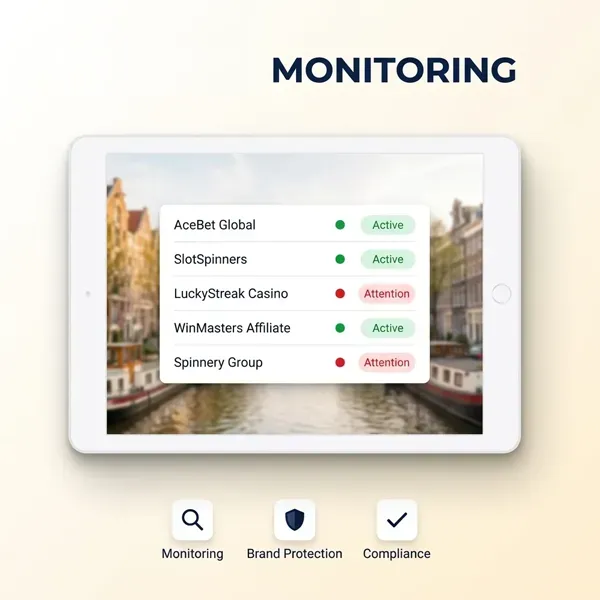
Impersonation Monitoring
Monitoring of imitations targeting casino brands: detecting lookalike domains, cloned pages, and fake support channels, gathering evidence, and securing their removal.
Learn more →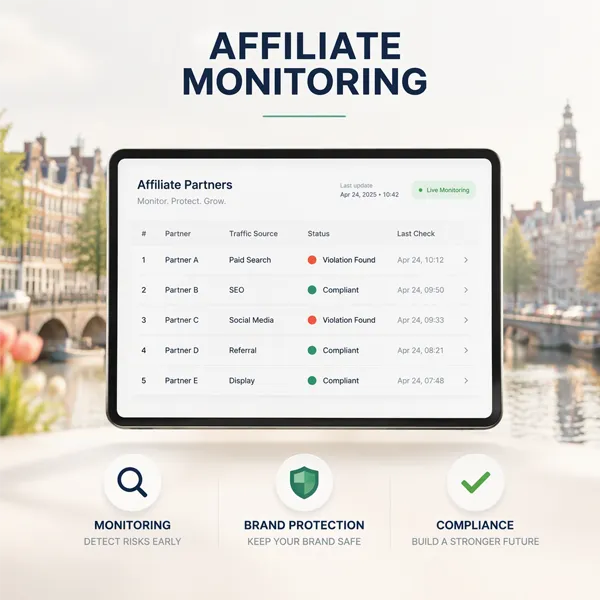
Affiliate Brand Monitoring
Affiliate brand monitoring for iGaming brands: checking partners' branded advertisements and pages for compliance with your guidelines, providing evidence and a clear...
Learn more →Welcome to NIWI
Impersonation monitoring is the systematic detection and removal of clone sites, fake domains, fake apps, and fraudulent support channels that misuse your brand. As a specialized iGaming SEO agency, we know how quickly these threats emerge - and how complex their removal can be when the hosting provider operates in a different jurisdiction. This article walks through which impersonation types appear most frequently, how we detect them, and which approach actually delivers results.
+300
iGaming SEO projects completed
+12
years in casino and betting search
iGaming SEO
Casino Link Building
Sports Betting SEO
Multi-GEO Content
Lookalikes, Clones and Fake Support
Casino brand phishing is a growing and increasingly sophisticated challenge across the iGaming industry. While other sectors mainly deal with brand impostors in paid advertising, casino brands face a multi-layered attack: fraudsters who replicate the complete digital ecosystem of a brand. From the domain to the support chat, from the bonus landing page to the app in the download store. The objective is always the same - deceive players into depositing to a fraudulent account or handing over their login credentials.
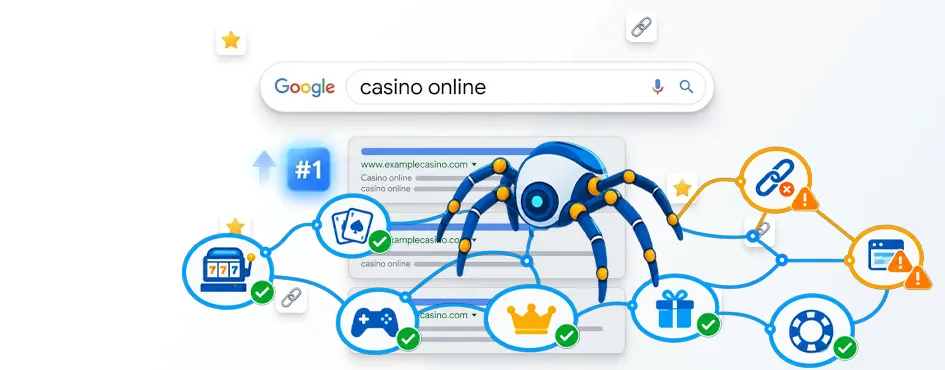
The iGaming industry is growing at a CAGR of 9.2% per year. That growing volume of money attracts not only serious operators but also a steady contingent of fraudsters looking to profit quickly from an established brand name, a built player base, and the trust that comes with both. Operators active in multiple Tier 1 markets - the UK, Germany, the Nordic countries - face proportionally more targeted impersonation campaigns as their brand recognition grows.
| Impersonation type | Attack method | Risk to the brand |
| 🌐 Lookalike domain | Typo, different TLD, extra hyphen or word | Player loss and reputational damage |
| 🖥️ Cloned website | Exact copy of login or bonus landing page | Data theft and financial fraud |
| 📲 Fake support channels | Fake Telegram, WhatsApp, customer service | Deceiving players and stealing money |
| 📱 Fake apps | Clone in Play Store or App Store | Malware, data theft, payment fraud |
| 📣 Fake social media | Impersonator accounts on Instagram or Facebook | Misinformation and ongoing phishing |
Each of these variants has its own risk profile and its own detection and removal strategy. What they share: the longer they stay online, the more damage they cause - financial, reputational, and regulatory damage accumulating simultaneously.

Types of Impersonation
Casino brand impersonation is more varied than it first appears. It rarely involves a single standalone fake site - it often involves ecosystems of fraud, sometimes carefully assembled and coordinated across channels. Our iGaming SEO agency encounters four dominant impersonation types in practice, each requiring its own specific detection and removal approach.
Lookalike Domains
Lookalike domains are the most direct and immediately accessible attack surface. Fraudsters register domains that closely resemble your official address: a typo in the name, an extra hyphen, a different country extension, or simply the word "casino" or "support" appended to your brand name. A visitor types one letter wrong or clicks a link in a suspicious message and lands on a site that looks exactly like yours - but is not.
Domain registrations are publicly accessible through WHOIS. Monitoring tools check new registrations daily for pattern matches with your brand name. The earlier a lookalike domain is flagged - ideally before the fake site ever goes live - the less damage results. Speed here is not merely an advantage; it is the difference between catching a threat early and absorbing the consequences.
Cloned Pages
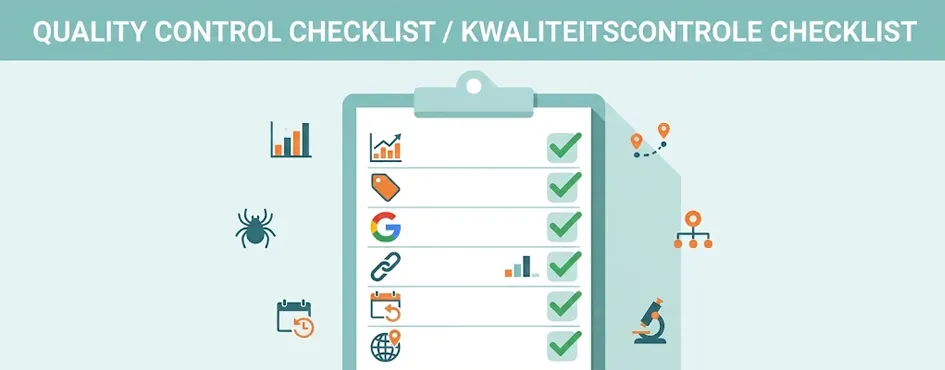
A cloned website is an exact or near-exact copy of your platform. Fraudsters scrape your HTML, CSS, and images and rebuild an identical login page or bonus landing page. Players enter their credentials on this casino brand phishing site and unknowingly hand their account over to criminals. Sites that imitate payment forms for methods such as Visa, Mastercard, crypto, Skrill, or Neteller additionally steal payment details directly from the user at the moment of entry.
Detecting a cloned website requires systematic monitoring of search results, indexed pages, and backlink patterns. Tools like Ahrefs and Semrush help identify content that exactly replicates your original pages. The faster a cloned website is found, the smaller the window in which players can be deceived.
Fake Support Channels
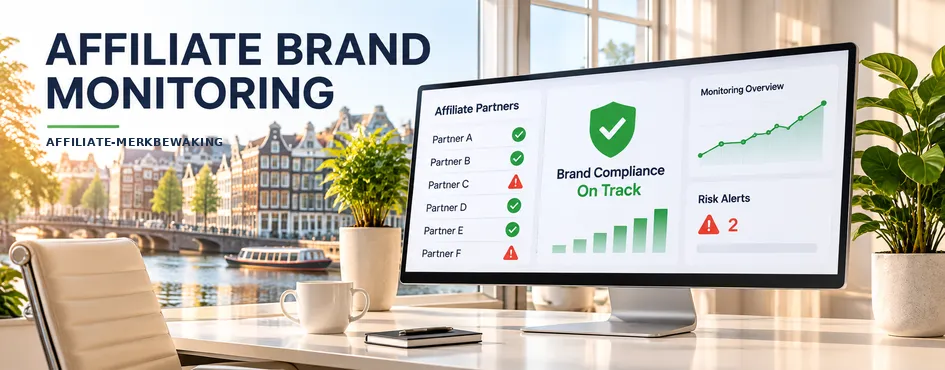
Fake support channels are a growing and frequently underestimated impersonation type. Through Telegram groups, WhatsApp numbers, and replicated live chat interfaces, fraudsters pose as your customer service team. They offer "help" to players reporting technical issues - and in doing so steal account credentials, request additional deposits, or manipulate bonus payouts. Players who are deceived through fake support consistently attribute the damage to your brand, not to the fraudster. The reputational cost lands entirely on you.
Fake Apps and Social Media
Fake apps surface in app stores with some regularity, replicating the name, logo, and interface of a legitimate casino app. Some are simple phishing screens; others contain functional malware. Fake social media accounts use your brand identity to circulate false promotions, route players to fake sites, or steal crypto through supposedly "official" time-limited offers. Industry analysis shows that 78% of players who fall victim to brand impersonation hold the original brand accountable - regardless of who was actually behind the fraud.
How We Detect Impersonations
A fake casino site or lookalike domain rarely announces itself. Players who have fallen victim do not always report it directly to the operator - if they realize what happened at all. Proactive impersonation monitoring is the only approach that gets ahead of the problem before your players discover it themselves.
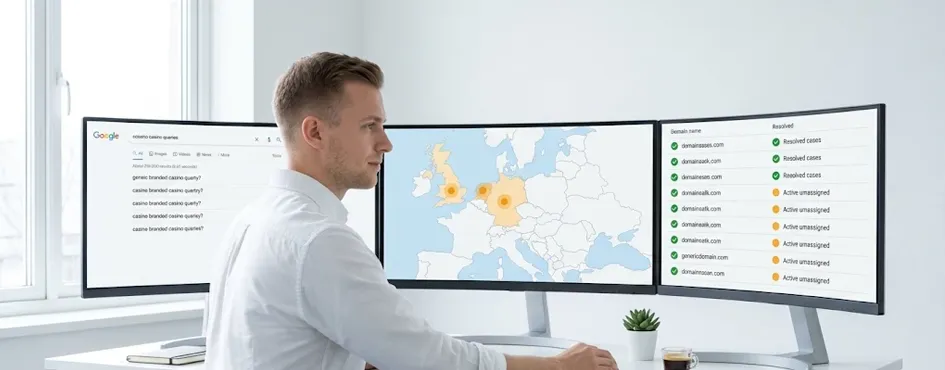
Our team monitors daily across multiple detection sources:
Domain registrations
new registrations matching your brand semantically are scanned every day through WHOIS feeds and specialized domain monitoring services;
Search engine results
results for your brand name and close variations are checked for unauthorized display of identical or closely similar sites;
Paid ads
Google Ads monitoring on brand-related queries to detect whether fake sites are buying traffic through your name;
App stores
weekly scans of Google Play and the Apple App Store for apps using your brand name or logo without authorization
Combining all detection sources
creates a monitoring coverage where more than 90% of active fake casino site variants are identified within 48 hours of going live
Social media and chat platforms
monitoring on Instagram, Facebook, TikTok, and Telegram for impersonation accounts and fraudulent groups.
That detection window directly determines how many players are exposed before the threat is removed.

Collecting Evidence
A complaint without evidence is an opinion. A complaint backed by evidence is a legally actionable request. That distinction determines whether a casino brand phishing site comes down quickly or stays active for weeks while the registrar asks for "additional documentation."
| Evidence element | What we capture | Purpose |
| 📸 Screenshots | Full pages including URL and timestamp | Visual proof of the impersonation |
| 🔎 WHOIS data | Registrar, registration date, ownership info | Identification and escalation route |
| 🏠 Hosting data | IP address, hosting provider, data center location | Contact point for takedown |
| 🗂️ Archive capture | Wayback Machine or own capture | Evidence against denial or deletion |
| 📊 Backlink and indexation data | Which queries and links point to the fake site | Reach assessment and damage scope |
A well-documented evidence package - with screenshots of the cloned website, WHOIS data, and an archive capture - measurably increases the success rate and speed of a takedown. Registrars and hosting providers process well-founded complaints significantly faster than vague reports without technical grounding. Our audit team compiles this package for every flagged case, so no time is lost on incomplete submissions.
Takedowns
Getting a cloned website offline requires parallel action across multiple channels. There is no universal removal button - every entity has its own procedure and its own response timeline. Knowing that and working multiple fronts simultaneously is what produces results as quickly as possible.
The takedown routes we deploy:
- 📧 Hosting provider: direct DMCA or AUP complaint to the hosting provider of the fake site - average response time: 24 to 72 hours for cooperative providers;
- 🌐 Domain registrar: formal domain suspension request including a trademark infringement overview - response time varies by registrar from 2 to 14 working days;
- 🔍 Google Safe Browsing: report filed via the phishing site reporting portal, after which Chrome and other browsers display a warning page to all users;
- 📱 App stores: content reports submitted to Google Play and the Apple App Store with brand impersonation evidence - average processing time: 3 to 7 working days;
- 📣 Social media: reports filed through platform-specific reporting systems on Instagram, Facebook, Telegram, or TikTok.
For fake sites operating in jurisdictions with limited enforcement - certain offshore locations, for example - an ICANN complaint via the UDRP procedure is an additional route for domain disputes. That process takes an average of 45 to 60 days but delivers a binding decision obligating the registrar to transfer or remove the domain.

Warning Players
Detection and removal solve the problem for future victims. But players who have already interacted with a casino brand phishing site deserve to be actively warned. Communication here is critical: fast, clear, and delivered through the official channels you control.
What we advise and support as part of impersonation monitoring:
- 📌 Official notice page: a fixed URL on your platform listing every official channel - domain, app links, official email address, support channels - easy to locate for any player who is uncertain;
- 📢 Push notifications and email communication: direct warnings through your own CRM system to active players the moment a specific fake site enters circulation;
- 🔍 Defensive SEO content: an optimized page that ranks for queries like "[your brand] fake site" or "[your brand] scam" so players searching those terms land on your official warning rather than on the fraudster's next page.
Free strategic SEO analysis?
That last step is bypassed by many operators but carries high practical impact: players actively investigating a suspicious site find your official response first - and do not end up on another iteration of the same impersonation.
Impersonation monitoring is not a one-off action - it is an ongoing defense system for your brand, your players, and your license standing. A fake casino site that goes undetected for weeks costs far more than refund requests and complaint processing. It costs player trust, SEO reputation, and in some cases the direct attention of a regulator. Our leading iGaming SEO agency combines systematic detection with actionable evidence packages and effective takedown routes - so you can focus on building a strong platform instead of managing brand emergencies.
Start Monitoring
Want to know how many impersonations of your casino brand are currently active? Request a free scan. Our audit team searches within 24 hours for lookalike domains, cloned websites, fake apps, and false support channels imitating your brand - and delivers a first overview including recommended actions, with no commitment required.
Your brand is too valuable to let someone else copy it.
FAQ
Frequently Asked Questions
Impersonation monitoring raises concrete, operational questions about timing, routes, and what can realistically be achieved. Below are the answers we give most consistently.
Our monitoring of domain registrations and search results runs daily. A new fake casino site is typically detected within 24 to 48 hours of going live. App store monitoring runs weekly; social media checks happen multiple times per week. Urgent signals - active phishing in particular - are reported to the client on the same working day.
That depends on the route taken. A responsive hosting provider can take a cloned website offline within 24 to 72 hours. Domain suspension via a registrar takes an average of 2 to 10 working days. App store removals take 3 to 7 working days. For ICANN/UDRP proceedings, we work to a timeline of 45 to 60 days for a binding ruling.
When a hosting provider does not respond, we escalate: directly to the upstream data center provider, through the registrar for domain suspension, and via Google Safe Browsing for browser-level warning display. In most cases, a combination of these routes achieves removal even when the primary host remains entirely unresponsive.
Reach out through our website, Telegram, or Slack. Our iGaming SEO agency is available Monday through Friday, 09:00 to 18:00 GMT.